
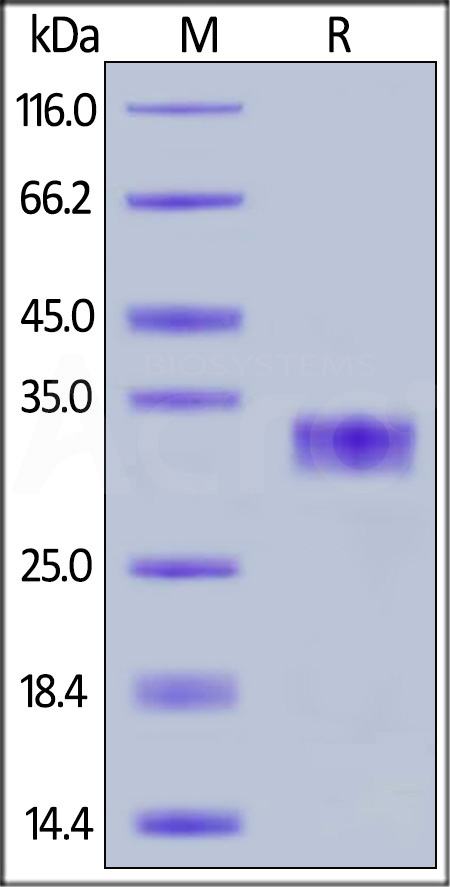
Human CXADR / CAR Protein, His Tag
Coxsackie virus and adenovirus receptor (CXADR) is also known as CAR, is a type I transmembrane glycoprotein for group B coxsackie viruses and subgroup C adenoviruses, and belongs to the CTX family of the Ig superfamily. CAR is strongly expressed in the developing central nervous system. It functions as a homophilic and also as a heterophilic cell adhesion molecule through its interactions with extracellular matrix glycoproteins such as: fibronectin, agrin, laminin-1 and tenascin-R. Human CXADR protein contains a signal sequence, a extracellular domain (ECD) with a V type (D1) and a C2 type (D2) Iglike domain, a transmembrane segment and a intracellular domain. D1 is thought to be responsible for homodimer formation in trans within tight junctions, and is necessary and sufficient for adenovirus binding. Variants of CXADR are attached to the cell membrane by a GPI- anchor.
Sign in to see prices and add items to your cart
Availability
Available in the following countries:
Get in touch with one of our specialists


Cristina Battagli
Product Specialist: Diagnostics, Metabolomics, Imaging & Cell Biology